Negotiation Is Not Conflict



LifeSkills Academy Blog
Check back often to find interesting information and updates.
Negotiation Is Not Conflict
Building a Collaborative Mindset
Blog Series - Week 1 of 9: 2026 Negotiations
What came to mind the last time someone used the word ‘negotiation’ around you? For most people, the word alone is enough to create a quiet tension — a feeling of pressure, opposition, or the sense that someone is about to push for something at your expense.

That reaction is understandable. Many of us first encountered negotiation through difficult experiences: financial stress, family conflict, workplace pressure, or conversations that felt more like contests than conversations. Over time, negotiation became synonymous with confrontation.
But that association deserves a second look. Because the kind of negotiation that actually strengthens lives and relationships looks nothing like a battle.
Healthy negotiation is not about overpowering others. It is about participating wisely.
At its best, negotiation is simply the process of clarifying what we need, understanding what others need, communicating with respect, and working together toward outcomes that actually hold. That shift in perspective changes everything. Suddenly the question is no longer “How do I win?” It becomes: “How do we move forward wisely, together?”
That is a very different conversation — and honestly, learning to have it may be one of the most valuable life skills any of us can develop.
Negotiation Happens Every Day
It’s easy to think of negotiation as something reserved for boardrooms, car dealerships, or salary conversations. But the truth is, we negotiate constantly — often without ever calling it that.
Inside families, negotiation shows up in how schedules get managed, how responsibilities are shared, how boundaries get communicated, and how financial decisions get made. In the workplace, it appears in conversations about roles, recognition, strategy, and direction. In friendships and communities, it surfaces whenever two people with different needs or perspectives try to find common ground.
Every healthy relationship requires some form of thoughtful negotiation. Without it, something else tends to fill the space:
- Avoidance, where difficult conversations simply never happen
- Quiet resentment that accumulates over time
- Emotional escalation when things finally come to a head
- Silent frustration on all sides
Healthy negotiation creates something entirely different — clarity, genuine understanding, a spirit of collaboration, and the kind of stability that makes relationships last.
Calm Is Not Weakness
One of the most persistent myths about negotiation is that effectiveness requires force. That to be taken seriously, we must be assertive to the point of aggression. That listening too carefully signals a lack of resolve.
None of that is true.

Calm, steady communication is not weakness. Asking thoughtful questions is not weakness. Listening fully before responding is not weakness. In fact, emotional steadiness is often far more effective than reactive pressure, because it keeps the conversation open rather than closing it down.
"A gentle answer turns away wrath, but a harsh word stirs up anger." — Proverbs 15:1
That principle holds in homes, in offices, in difficult financial conversations, and in community disagreements alike. A calm presence creates space for solutions. Reactive words tend to deepen conflict before anyone has had the chance to actually solve anything.
Healthy negotiation is not about dominating the conversation or engineering an outcome in your favor. It’s about creating enough clarity and trust that wiser decisions can emerge — sometimes through compromise, sometimes through a well-asked question, and sometimes simply by slowing a conversation down long enough for everyone to think clearly.
We Are Allowed to Participate Wisely
Here is something that often goes unsaid: many of us were never taught healthy negotiation. We absorbed whatever patterns the people around us modeled, and those patterns were not always healthy ones.
Some learned to stay quiet in order to keep peace. Others learned that the loudest voice controlled outcomes. Some learned to avoid hard conversations entirely rather than risk the discomfort of raising them. The result is that many people move through life believing their only real options are silence or aggression — either accept the terms in front of you or fight to change them.
There is another way.
Asking questions is not overstepping. Requesting clarification is not demanding. Expressing a concern calmly is not aggression. Participating thoughtfully in decisions that affect your life is not selfishness — it is healthy stewardship of what you have been entrusted with.
When we engage in negotiation this way, we bring clarity and dignity to the conversation. And we make it far more likely that what comes out of it will actually last.
Children Learn This Earlier Than We Think
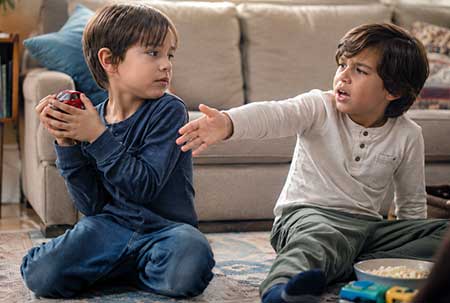
Negotiation skills begin forming remarkably early. Long before children ever sit across a table from anyone, they are learning how to navigate disagreement, express needs, and handle outcomes they did not want — through sharing toys, taking turns, navigating sibling conflict, and figuring out the boundaries of household expectations.
What they observe in the adults around them shapes those skills profoundly. When children watch the adults they trust model calm listening, fairness, and collaborative problem-solving, they learn something foundational: that relationships do not have to operate through fear, manipulation, or emotional dominance. That honesty and boundaries can coexist with cooperation. That peaceful communication is not the absence of strength — it is one of its clearest expressions.
Building that foundation early is one of the most lasting gifts we can give.
A Wiser Way Forward
Modern culture tends to reward urgency. We are surrounded by pressure to act fast, push hard, win decisively, and claim ground before someone else does. That energy can feel compelling in the moment, but it rarely produces the kind of outcomes that hold over time.
Wisdom tends to grow differently. Healthy relationships, healthy communication, and healthy decisions are usually built through patience, thoughtful participation, and genuine mutual respect — not through speed or force.
At its healthiest, negotiation moves people from conflict toward collaboration, from assumption toward understanding, and from reaction toward wisdom. It reminds us that we do not have to approach every disagreement as opponents. Often, we are simply people trying to navigate life together, and doing it wisely makes all the difference.
"If it is possible, as far as it depends on you, live at peace with everyone." — Romans 12:18
That kind of wisdom strengthens homes, workplaces, friendships, finances, and communities. And in a world increasingly shaped by tension and reaction, learning to negotiate with calmness, dignity, and care for the people across from us may be one of the most important skills we can build.
Journey With Us This July
This is the first of four posts exploring personal negotiation as a life skill — not a combat tactic, but a tool for building stronger outcomes and stronger relationships at the same time.
Over the coming weeks, we’ll move from mindset into method, exploring the practical skills that make negotiation more effective, more collaborative, and more sustainable across every area of life. We’ll look at how to prepare well, how to listen strategically, how to navigate high-stakes conversations with steadiness, and how to reach agreements that actually last.
And if you’re ready to go deeper, watch for our Negotiations Toolkit — available in our store on August 17th — designed to put these skills directly into your hands.
Stay connected with LifeSkills Academy for classes, practical content, and tools designed to help build strong relationships.
Sign up at www.lifeskillsacademy.expert
Most Recent Posts ...

Posted on: 10/19/2026

Posted on: 10/12/2026

Posted on: 10/5/2026

Posted on: 9/28/2026
Search All Blog Posts
Blog Post Archive Categories
- You're Not Where You Were in January
- Teaching Financial Awareness to Children & Young Adults
- Transparency, Trust & Shared Responsibility
- Are You Covered for the Life You`re Actually Living?
- What Financial Advisors Actually Do
- You Are Not Meant to Figure Out Finances Alone
- Halloween Etiquette: Teaching Respect and Community Spirit
- Words of Wisdom: Traveling 2024
- Thankful Thursdays
- My interview with Dennis Pearce