When Relationships Get Tense, Call a Holiday Ceasefire



LifeSkills Academy Blog
Check back often to find interesting information and updates.
When Relationships Get Tense, Call a Holiday Ceasefire
The holidays are approaching! Invitations are arriving, celebrations are being planned, and families and friends are preparing to gather. And somewhere between the dinner menu and the seating arrangements, there's that familiar thought:
I wonder if we're going to have THAT conversation again.
Perhaps it's an unresolved family disagreement, a difference in political views, an old misunderstanding, or a conversation you've been postponing because you're not sure how it will end.
You value the relationship. You want to enjoy the gathering. But you also know that certain subjects can turn a cheerful occasion into an uncomfortable memory.
Here's an encouraging possibility: What if you don't have to resolve every disagreement before enjoying the people in your life?
What if you could call a holiday ceasefire?
A Ceasefire Isn't Surrender
On the world stage, ceasefires create opportunities to stop hostilities, reduce harm, and sometimes open the door to negotiations.
Our everyday disagreements are certainly different, but the underlying principle offers a useful lesson. A ceasefire doesn't mean everyone suddenly agrees. It doesn't erase what happened or require anyone to surrender their convictions. It means recognizing that continuing a conflict may not be the most constructive choice right now.
Consider how many holiday gatherings bring together people with different experiences, expectations, beliefs, and opinions. Following a major election, those differences may feel especially pronounced.
Some people are celebrating. Others are disappointed or uncertain about what comes next. But must every family gathering become another opportunity to debate the issues?
Perhaps we can allow time for events to unfold, remain thoughtful about our concerns, and choose to enjoy the relationships that matter to us.
We can choose to disagree without disconnecting.
The Wisdom of Knowing When to Wait
There's a difference between avoiding a necessary conversation and choosing a better time to have it.
- Avoidance allows a problem to linger indefinitely because we're unwilling to address it.
- Wise waiting recognizes that timing, emotional readiness, and circumstances influence whether a conversation will be productive.
Imagine a disagreement with a family member over a decision made earlier in the year. You still have concerns. They still have their reasons. But is Thanksgiving dinner the best setting to revisit the issue?
Perhaps not.

You might decide to enjoy the gathering and arrange a conversation afterward, when both of you have time to listen without an audience or the pressure of a holiday schedule. That's not ignoring the problem. It's exercising judgment about when and how to address it.
Of course, some issues involve serious harm, broken trust, or responsibilities that cannot safely wait. A ceasefire should never require abandoning necessary boundaries.
The goal isn't to avoid what matters. It's to give important
conversations their best opportunity to succeed.
Three Communication Skills That Help
A holiday ceasefire doesn't require a complicated strategy. But a few communication skills can make an enormous difference.
1. NOTICE: Pay Attention to How Others Communicate
People often reveal their communication preferences through their words and actions.
- Someone asking detailed questions may appreciate more information.
- Someone emphasizing feelings or relationships may appreciate acknowledgment before discussing solutions.
- Someone moving quickly toward decisions may prefer a clear, concise explanation.
- And someone who pauses frequently may simply need more time to think.
These are clues, not permanent labels. The same person may communicate differently depending on the situation. Paying attention helps us respond thoughtfully rather than assuming everyone processes conversations the way we do.
2. CHECK: Make Sure You Understand
Before responding to something upsetting, try a clarifying question.
- "Am I understanding what concerns you?"
- "Is that what you meant?"
- "Would you help me understand your perspective?"
These questions demonstrate compassion through action. They also reduce the likelihood of arguing over something the other person never intended to communicate.
Understanding someone's perspective
doesn't require agreeing with it.
3. ADAPT: Choose a Response That Preserves Respect
Sometimes the most effective response isn't another explanation. It's recognizing that both people have expressed their positions, and continuing the discussion is unlikely to change either one.
Here's a remarkably useful four-word response:
"You may be right."
That's it!
No lengthy defense. No requirement to prove your position. No need to deliver a closing argument worthy of the Supreme Court. Those four words acknowledge that another perspective may have merit without requiring you to abandon your own.
When offered sincerely, they can bring an unproductive exchange to a graceful conclusion. And sometimes that's exactly what's needed.
If the issue genuinely requires a decision, you can acknowledge the difference and agree to revisit it later.
Not every conversation needs a winner.
Forgiveness: A Gift That Doesn't Need Wrapping
The holiday season invites us to think about generosity, gratitude, and giving. But some of the most meaningful gifts never arrive in a package.
Forgiveness can be one of them.
Forgiveness doesn't necessarily mean forgetting an offense, excusing harmful behavior, or immediately restoring trust. It may begin with a willingness to loosen resentment's hold on our attention and emotional energy. Sometimes we can offer goodwill before every disagreement has been resolved.
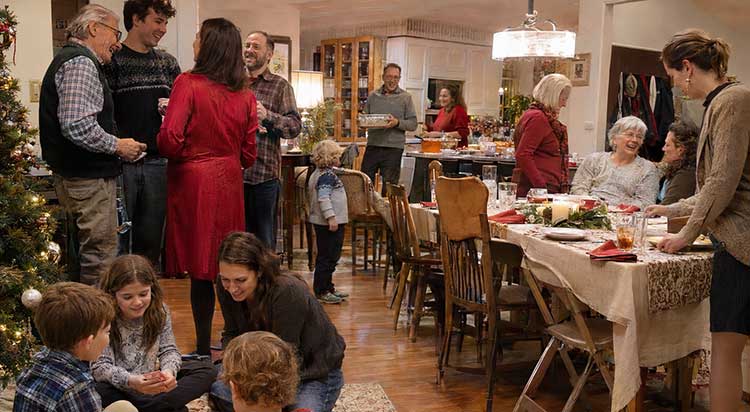
We can share a meal, appreciate someone's kindness, laugh at a familiar family story, or simply enjoy being together. And perhaps those positive experiences will create opportunities for a healthier conversation later.
We don't have to settle every difference
to make room for something good.
A Gentle Practice: Give Peace a Place at the Table
Before your next gathering, consider three questions:
- Is there a disagreement I've been carrying that doesn't need to dominate this occasion?
- Could I practice listening, asking a clarifying question, or allowing another perspective without immediately challenging it?
- Is this an issue that needs a future conversation—or one I can wisely release?
Then choose one intentional action.
Perhaps you'll offer a genuine compliment, ask about something meaningful in another person's life, or simply resist reopening a familiar argument. You don't have to manage everyone else's emotions or manufacture a perfect holiday.
You can choose how you contribute to the atmosphere.
A LifeSkill Worth Carrying Forward
Romans 12:18 offers a wonderfully practical reminder:
"If it is possible, as far as it depends on you,
live at peace with everyone." (NIV)
Consider the wisdom in those words. We cannot control every relationship or guarantee that others will respond as we hope. But we can take responsibility for our contribution.
As we enter this season of celebration, perhaps the most meaningful gift we can offer is the willingness to make room for one another—even when our perspectives differ.
- Some conversations deserve another day.
- Some disagreements can be released altogether.
- And some relationships may discover renewed warmth when we stop requiring every difference to be settled before joy can begin.
A ceasefire isn't surrendering what matters.
It's recognizing that not every disagreement deserves another battle.
May your holidays be filled with meaningful connections, generous hearts, and the freedom to enjoy the good that's already present.
Continue the Journey
Stay connected with LifeSkills Academy for classes, practical content, and tools designed to help build strong relationships.
Sign up here!
Most Recent Posts ...
Posted on: 11/9/2026

Posted on: 11/2/2026

Posted on: 10/26/2026

Posted on: 10/19/2026
Search All Blog Posts
Blog Post Archive Categories
- You're Not Where You Were in January
- Teaching Financial Awareness to Children & Young Adults
- Transparency, Trust & Shared Responsibility
- When Relationships Get Tense, Call a Holiday Ceasefire
- When Everyone Wants a Piece of You
- Are You Looking at Your Whole Financial Picture?
- Halloween Etiquette: Teaching Respect and Community Spirit
- Words of Wisdom: Traveling 2024
- Thankful Thursdays
- My interview with Dennis Pearce