When the Relationship Is What's at Stake



LifeSkills Academy Blog
Check back often to find interesting information and updates.
When the Relationship Is What's at Stake
Negotiating Expectations, Boundaries & Shared Responsibilities
Blog Series – Week 4 of 9: Relational Negotiation
It started with dishes.
Not a fight. More of a slow accumulation — a dish left in the sink, a comment swallowed, a heavier silence by the weekend. By the time they sat down to talk, it wasn’t really about dishes anymore. It was about feeling unseen, undervalued, and exhausted from carrying more than they’d ever agreed to carry.

Their counselor asked one question: “Had you ever actually discussed who was responsible for what?” Both of them paused. The answer, quietly, was ‘no.’
That scenario is more common than most of us want to admit. Many relational tensions don’t begin with betrayal or crisis. They begin with assumption — the quiet belief that the people we love should already know what we need, what we value, and what we’re silently hoping for.
“Unspoken expectations are premeditated resentments.”
— widely cited in couples’ therapy literature
That’s worth sitting with. Research by Dr. John Gottman found that unresolved conflicts from unmet expectations are among the leading causes of relational dissatisfaction. And they rarely arrive with a warning label. They arrive as dishes, as sighs, as a partner who has stopped asking how your day went.
Negotiation in Relationships Isn’t About Winning
The word negotiation can feel out of place in a conversation about love or friendship. We associate it with conference rooms and car lots, but not kitchen tables.
Relational negotiation happens every day — in how we divide responsibilities, how we raise difficult topics, how we respond when someone’s needs bump up against our own. The question isn’t whether we negotiate. It’s whether we do it well.
The healthiest shift any of us can make is moving from “How do I get my way?” to “How do we move forward wisely together?” That single question changes communication, conflict, and the long-term health of nearly every relationship it touches.
Hidden Cost of Unspoken Expectations
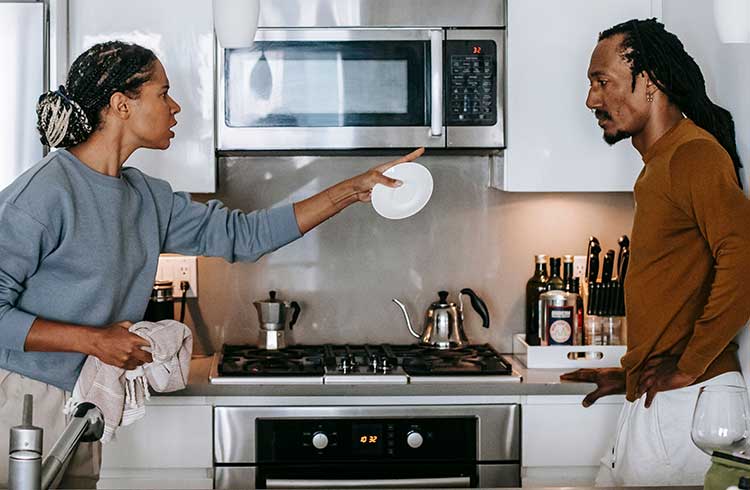
Most tension doesn’t begin with conflict. It begins with an assumption that was never spoken aloud.
Psychologists call it the expectation gap — the distance between what we silently hoped for and what actually happened. Over time, that gap fills with frustration, then disappointment, then resentment. And resentment, as Gottman’s research shows, doesn’t stay contained. It leaks into how we listen, how we respond, and ultimately how we see the other person.
Bringing expectations into the light — before resentment takes root — often resolves more than it creates. Conversations like these are deceptively simple:
- “Could we talk about how we’re handling this? I want to make sure we’re both on the same page.”
- “I realize I haven’t said this out loud — but I’ve been hoping for (fill in the blank)... Is that something we can work toward together?”
- “What would feel most supportive for both of us right now?”
These aren’t scripts for confrontation. They’re invitations for clarity — and clarity is one of the most underrated forms of care.
Boundaries Aren’t Walls — They’re Blueprints
Few words carry more cultural confusion than boundaries. For some it sounds clinical. For others, selfish. In reality, healthy boundaries are one of the most relationally generous things we can offer.
A boundary isn’t a wall that keeps people out. It’s a blueprint that tells people how to be close to you without depleting you.
When we don’t name our limits — our capacity, our availability, our bandwidth — we end up saying yes when we mean I can’t, not right now. We give more than we’re able to and call it love. And then, quietly, we become resentful of the very people we’ve been overextending for.
Relational wisdom isn’t about how much you can give. It’s about how wisely you can steward what you have — for yourself and for the people who matter most.
Pressure Reveals What Practice Makes Permanent

It’s easy to communicate well when life is calm. The real measure of relational health shows up in tension — when the schedule collapses, the disagreement escalates, or the need arrives at the worst possible moment.
Those moments aren’t interruptions to relationship. They are the relationship. They reveal which habits we’ve actually built, not just which ones we aspire to. Research on couples who repaired relational strain found a consistent thread: they practiced directness and involvement rather than avoidance and withdrawal. Not perfection — just a willingness to stay present and keep the conversation alive.
Children Learn These Patterns
Long before children understand the word negotiation, they’re watching how the adults in their lives handle it.
They notice how disagreements unfold. Whether questions are welcomed. How tone shifts under stress. When they regularly see respectful communication, steady emotions, and collaborative problem-solving, they absorb something lasting: that relationships don’t have to operate through fear, silence, or escalation.
Adults don’t have to be perfect models. They just have to keep trying — and let their children see them trying. That may be one of the greatest relational gifts we can offer.
A Quiet Anchor
Two passages have shaped how we think about relational stewardship at LifeSkills Academy. Not calls to passivity — calls to wisdom.
“Let each of you look not only to his own interests, but also to the interests of others.”
— Philippians 2:4 ERV
“If it is possible, as far as it depends on you, live at peace with everyone.”
— Romans 12:18 ERV
Relationships are not competitions to win. They are responsibilities to care for wisely — entered with both clarity and compassion.
Something Worth Sitting With
Is there an expectation you’ve been carrying silently — in a relationship that matters to you — that has never actually been spoken out loud? What might change if you brought it gently into the conversation this week?
Next week we shift to the practical: negotiating life’s bigger transitions. We’ll explore how the same skills that strengthen relationships also help us find new footing when circumstances shift unexpectedly.
The Personal Negotiation Toolkit releases August 17 — built for exactly these kinds of moments.
Stay connected with LifeSkills Academy for classes, practical content, and tools designed to help build strong relationships.
Sign up at lifeskillsacademy.expert
Most Recent Posts ...
Posted on: 9/14/2026

Posted on: 9/7/2026
Posted on: 8/31/2026

Posted on: 8/24/2026
Search All Blog Posts
Blog Post Archive Categories
- You're Not Where You Were in January
- Teaching Financial Awareness to Children & Young Adults
- Transparency, Trust & Shared Responsibility
- What Should I Believe?
- Negotiating Your Workload
- Team Negotiation
- Halloween Etiquette: Teaching Respect and Community Spirit
- Words of Wisdom: Traveling 2024
- Thankful Thursdays
- My interview with Dennis Pearce